Why fine hair is more vulnerable to heat and tension
A named New York stylist quoted by Allure advises sticking with low to medium heat and adjusting speed as needed, because too much heat can make fine hair limp and increase breakage risk. This is practical stylist guidance rather than a measured safety threshold. No verified maximum safe temperature for fine hair was part of the evidence reviewed for this page, so treat any specific degree figure you see elsewhere as brand- or tool-specific rather than a universal limit.
The practical takeaway is not that fine hair needs a completely different dryer, but that it rewards control. You want temperature you can turn down, airflow you can adjust without blasting strands out of place, and a tool light enough to maneuver without gripping hard or pulling at the roots.
- Fine hair has less bulk per strand, so heat and tension have a proportionally larger effect.
- Stylist guidance reported by Allure favors low to medium heat with speed adjusted as needed.
- No universal safe temperature for fine hair appears in the sources reviewed here; brand recommendations vary.
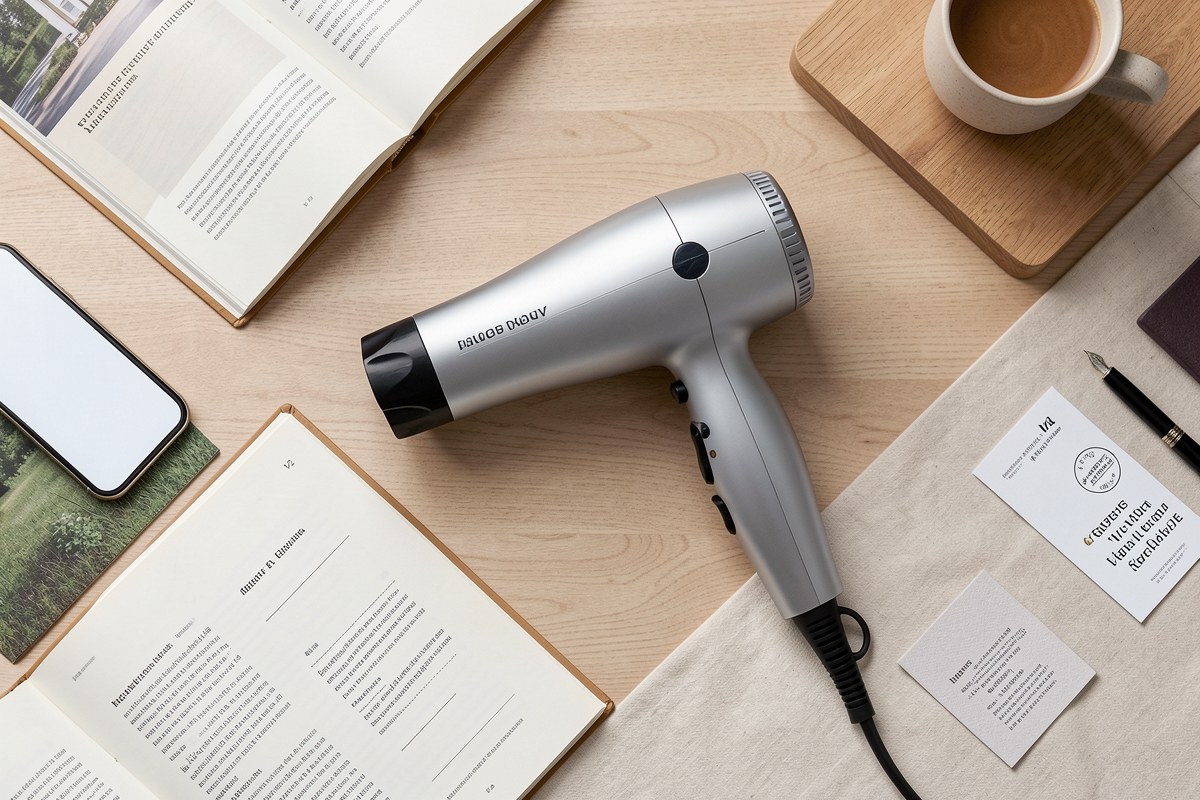
Features that matter most: weight, speed control, and low heat
When you are choosing a hair dryer for fine hair, the features that change your daily experience are less about peak power and more about control. A secondary roundup lists adjustable heat and speed settings, ionic technology, weight and noise level, and attachments and styling features as the factors it weighs for fine hair. Another vendor guide argues that a one-button dryer is unsuitable for fine hair because it removes the ability to separate heat from airflow, and that lightweight models help with the precision fine styling requires.
Speed control matters as much as heat. If the dryer has a genuine low-speed setting, you can move air through the hair without whipping fine strands into tangles or blowing them flat against the scalp. Heat settings let you stay in the low to medium range the stylist quoted by Allure recommends. The combination of low heat plus moderate airflow is usually more comfortable and more controllable than high heat plus high airflow, which can dry the surface before the interior of a section is ready.
Weight is an underrated specification. A heavy dryer forces you to grip harder and angle your wrist awkwardly, which is exactly the kind of tension fine hair does not need. A dryer that feels balanced in your hand lets you keep the nozzle pointed where you want it and lift roots without wrestling the tool.
- Look for separate heat and speed controls rather than a single on/off switch.
- A low-speed setting lets you dry fine hair without creating tangles or flatness.
- Low to medium heat with moderate airflow is the combination stylist guidance reported by Allure favors.
- Weight and balance affect how much tension you put on fine hair while styling.
- Ionic technology, noise level, and attachments are commonly listed selection factors, though independent performance data is limited.
Sources: Allure, Marie Claire, KangRoad
Step-by-step drying routine for fine hair
The order of operations matters more than any single setting. Start by removing excess water with a towel using gentle squeezing rather than vigorous rubbing, then detangle with a wide-tooth comb before you turn the dryer on. Sectioning the hair keeps you from over-drying one area while another is still damp, and it lets you work with smaller, more controllable amounts of hair at a time.
A brand journal notes that pairing an adjustable dryer with protective techniques such as sectioning, maintaining distance between the dryer and the hair, and favoring low heat or gentle drying helps preserve fine hair strength and reduce breakage. That is vendor guidance, but it lines up with the stylist advice reported by Allure and with the general principle that fine hair does better with patience than with force.
- Towel-dry by squeezing, not rubbing, to remove excess water without roughing up the cuticle.
- Detangle with a wide-tooth comb while the hair is still damp and before applying heat.
- Apply a heat protectant if you use one, distributing it evenly rather than concentrating it at the roots.
- Section the hair into manageable pieces, clipping the rest out of the way.
- Set the dryer to low or medium heat and a low or medium speed.
- Keep the dryer several inches from the hair and aim airflow down the shaft from lifted roots.
- Dry each section until it is just dry, then move on rather than continuing to apply heat.
- Finish with a cool shot to set the shape if your dryer has one.
Volume and root-lift techniques with a dryer
Volume on fine hair comes from lifting the root away from the scalp while the hair dries, not from blasting the whole head with hot air. Two vendor sources agree that a concentrator nozzle should be used when blow-drying fine hair and that aiming airflow down the hair shaft from lifted roots supports volume. That direction of guidance appears in more than one place, though neither source provides measurement or named expert attribution, so treat it as a sensible technique rather than a proven result.
A practical approach is to dry the roots first with your head upright or slightly forward, using your fingers or a round brush to lift sections away from the scalp. Once the roots are dry, finish the lengths with the concentrator pointed down the shaft to smooth the cuticle. If you use a diffuser, choose a small one and keep the heat low; a secondary roundup specifically advises avoiding overly aggressive or large diffusers on fine hair and favoring gentle concentrators or small diffusers to control airflow and reduce the risk of over-styling or breakage.
- Dry roots first, using fingers or a brush to lift hair away from the scalp.
- Aim airflow down the shaft from lifted roots to encourage volume and smoother cuticles.
- Use a concentrator for directional airflow; it is the attachment most consistently recommended for fine hair.
- If you diffuse, use a small diffuser on low heat to avoid over-styling delicate strands.
- Finish with a cool shot to help the shape hold.
Sources: Marie Claire, AENO, KangRoad
Common fine-hair drying mistakes to avoid
Most fine-hair problems after drying come from a short list of habits. Using the highest heat setting because it feels faster, holding the dryer too close, skipping sectioning, and pulling at the hair with a brush while it is hot are the usual culprits. The stylist quoted by Allure specifically connects too much heat with limpness and increased breakage risk, which is the opposite of the volume most fine-haired users are trying to achieve.
Another common mistake is over-drying. Fine hair releases moisture quickly, and once a section is dry, additional heat does not add benefit. A brand guide suggests limiting heat styling to a few times per week for fine hair, but this is vendor guidance rather than an established clinical recommendation. Use it as a general reminder to give hair a break between styling sessions rather than as a rule.
Finally, do not assume a more powerful dryer is automatically better. A vendor guide argues that an AC motor provides stronger, more consistent airflow, which could let you rely on air speed rather than high heat, but no comparative measurement was available to confirm that claim. If your current dryer has good speed control and a genuinely low heat setting, the tool itself may not be the limiting factor.
- Using high heat when low to medium heat would do the job.
- Holding the dryer too close to the hair or scalp.
- Skipping sections and trying to dry large amounts of hair at once.
- Pulling a brush through hair that is still hot.
- Continuing to apply heat after a section is already dry.
- Assuming wattage alone determines how gentle a dryer is on fine hair.
Sources: Allure, Woman & Home, KangRoad
Start from your hair type and goal
Fine hair is not the same as thin hair, and neither is the same as fragile hair, though the three often overlap. Before you shop or change your routine, decide what you actually want from the dryer. If your goal is maximum volume at the roots, airflow control and a concentrator matter most. If your goal is gentle everyday drying with minimal manipulation, low heat and a low speed setting are the priorities. If your goal is stretching time between washes or reducing styling frequency, a faster but still controllable dryer may be worth the trade-off.
Because fine hair responds quickly to heat, the settings you choose will do more for your results than the price tag. That is why this guide puts technique and control ahead of any single recommendation.
- Volume goal: prioritize airflow control, a concentrator, and a cool shot.
- Gentle daily drying: prioritize low heat, low speed, and light weight.
- Less frequent styling: prioritize efficient drying without abandoning temperature control.
- Fine hair is a texture description, not a measure of how much hair you have.
Sources: Allure, Marie Claire, AENO
Heat and speed settings
The most useful configuration for fine hair is a dryer with multiple heat settings and at least two or three speed settings, so you can separate temperature from airflow. Allure reports that for the T3 AirLuxe specifically, heat settings one through three are recommended for fine hair, three through four for medium hair, and four through five for coarse hair. That is a brand-specific setting recommendation, not a universal standard, but it illustrates the principle: fine hair usually sits at the lower end of whatever scale your dryer uses.
Speed should be adjusted to the section you are working on. Lower speeds for the roots and face-framing pieces, slightly higher speeds for the bulk of the lengths once the roots are dry. If your dryer has a cold setting, use it at the end to close the cuticle and set the shape.
- Choose a dryer with at least three heat settings and two or more speed settings.
- Stay in the low to medium heat range for fine hair.
- Adjust speed by section rather than leaving it on maximum.
- A cold setting is useful for finishing and setting volume.
Airflow and drying time expectations
Fine hair generally dries faster than thick or coarse hair because there is less mass to hold moisture. That is a practical observation rather than a measured figure from the sources reviewed here, but it explains why fine-haired users often find that the highest heat setting is unnecessary. If your hair is dry within a few minutes on low heat, there is no benefit to rushing it on high heat.
Airflow is not the same as heat. A dryer that moves a good volume of air at a moderate temperature can dry fine hair efficiently without the surface drying and the interior staying damp. Concentrator attachments focus that airflow where you want it, which reduces the total time you spend with heat on any one section.
- Fine hair typically holds less moisture, so drying times are often shorter than for thicker hair.
- Moderate airflow at low to medium heat can be more efficient than high heat alone.
- A concentrator focuses air on the section you are working on, reducing overall heat exposure.
- Stop when the section is dry; additional heat does not improve the result.
Sources: Allure, Marie Claire, KangRoad
Wattage and voltage basics
Wattage tells you how much power a dryer draws, not how gentle it is on hair. The stylist quoted by Allure suggests a dryer in the roughly 1500 to 1800 watt range with ceramic technology for more even heat distribution on fine hair. That is one professional's recommendation, presented as a range rather than a validated standard. For reference, Allure reports that the T3 AirLuxe is listed at 1875 watts, slightly above that range, while the FHI Heat VersaSphere Pro Air 6-in-1 Multi-Styler is listed at 1300 watts.
Voltage is a separate issue. In the United States, household outlets deliver 120 volts, and dryers sold for the US market are built for that. A dryer designed for a different voltage region will not perform correctly on a US outlet without an appropriate converter, and using the wrong voltage can be unsafe. If you travel, check the dryer's voltage rating rather than assuming it will work abroad or that a plug adapter is enough.
Electrical safety listings are another consideration. The research for this page did not include information about UL or ETL certification requirements for hair dryers, so we cannot confirm specific listing standards. When purchasing, look for a safety mark from a recognized testing laboratory on the product or packaging. That is a general precaution, not a substitute for checking local requirements.
- Wattage indicates power draw, not gentleness.
- One stylist recommendation reported by Allure places fine-hair dryers around 1500 to 1800 watts with ceramic heat distribution.
- The T3 AirLuxe is listed at 1875 watts; the FHI Heat VersaSphere Pro Air is listed at 1300 watts.
- US dryers are built for 120-volt outlets; do not use a dryer on a voltage it was not designed for.
- Look for a recognized electrical safety listing mark when buying, though specific standards were not part of the sources reviewed here.
Ionic, ceramic and tourmaline claims
Ionic, ceramic, and tourmaline technologies appear in almost every fine-hair dryer description, and the sources reviewed here repeat those claims without independent test data behind them. A secondary roundup lists ionic technology as a selection factor for fine hair, and the stylist quoted by Allure mentions ceramic technology for more even heat distribution. Byrdie notes that the T3 AireLuxe has an ionic switch that can be turned on or off. These are marketing-based claims and stylist opinions, not results from controlled testing.
That does not mean the features are useless, but it does mean you should not pay a premium solely for a technology label. If a dryer has the heat and speed control you need, the ionic or ceramic marketing is a secondary consideration.
- An ionic switch lets you turn that feature on or off if you prefer.
Sources: Allure, Byrdie, Marie Claire
Weight, noise, cord and handling
Handling matters more for fine hair than for many other textures because the styling process often involves lifting roots and working with small sections. A lighter dryer reduces fatigue and lets you keep a light grip, which in turn reduces the tension you put on the hair. A secondary roundup lists weight and noise level among its selection factors, though it does not provide measured values for either.
Cord length affects how freely you can move around the mirror. Allure reports a 9-foot cord on both the T3 AirLuxe and the FHI Heat VersaSphere Pro Air, which is long enough for most bathroom setups. Noise is a comfort and preference issue; some people find lower-pitched dryers less fatiguing, but no decibel measurements were available for the models discussed here.
Balance is harder to describe than weight. A dryer that feels balanced in your hand will be easier to control than one that is technically lighter but nose-heavy or awkward to angle.
- A lighter, balanced dryer makes it easier to keep a light grip on fine hair.
- Weight and noise are commonly listed selection factors, but measured values are often not published.
- A 9-foot cord is reported for the T3 AirLuxe and the FHI Heat VersaSphere Pro Air.
- Balance in the hand affects control as much as total weight.
Sources: Allure, Marie Claire
Attachments included
For fine hair, the concentrator is the attachment you will use most. It focuses airflow so you can direct it down the shaft and lift roots without scattering strands. Allure reports that the T3 AirLuxe comes with a drying concentrator and a styling concentrator. The FHI Heat VersaSphere Pro Air is reported to come with a wider set, including two concentrator nozzles, two self-wrap curling barrels, a curl volumizing diffuser, and a frizz-taming smoother.
Diffusers are useful if you wear fine hair wavy or curly, but a secondary roundup advises avoiding overly aggressive or large diffusers on fine hair and favoring gentle concentrators or small diffusers instead. That is advisory rather than tested guidance, but it fits the general principle of controlling airflow rather than blasting the hair.
- A concentrator is the most useful attachment for fine, straight or wavy hair.
- The T3 AirLuxe is reported to include a drying concentrator and a styling concentrator.
- The FHI Heat VersaSphere Pro Air is reported to include two concentrators, two curling barrels, a diffuser, and a smoother.
- If you diffuse fine hair, choose a small diffuser and keep the heat low.
Sources: Allure, Marie Claire
Price tiers and what they change
Price in the US hair dryer market ranges from budget hot-air brushes to full-size professional dryers, and the differences are not always about performance on fine hair. Allure reports the FHI Heat VersaSphere Pro Air at a $350 list price with a $280 sale price reported by one outlet. These are US retail figures from the source publication dates and are subject to change.
Higher price often buys more settings, a longer cord, additional attachments, and a more solid feel. None of those guarantees less damage on fine hair. A cheaper dryer with genuine low heat and low speed can be gentler than an expensive one used on high heat. The table below compares the named models for which the sources provided shared specifications.
- Prices are US retail figures from the source dates and can change.
- More expensive dryers often add settings, attachments, and cord length rather than proven gentleness.
- Match the dryer to your technique before matching it to a price tier.
| Model | Listed wattage | Heat settings | Speed settings | Cord | Attachments reported | Listed US retail price |
|---|---|---|---|---|---|---|
| T3 AirLuxe Professional Ionic Hair Dryer | 1875 W | 5 heat settings plus cold | 3 | 9 ft | Drying concentrator and styling concentrator | $225 (a $192 sale price was listed by one retailer as of the source date) |
| FHI Heat VersaSphere Pro Air 6-in-1 Multi-Styler | 1300 W | 4 heat settings plus cold | 3 | 9 ft | 2 concentrators, 2 self-wrap curling barrels, 1 curl volumizing diffuser, 1 frizz taming smoother | $350 list with a $280 sale price reported by one outlet |
| Revlon One-Step Volumizer | Not reported in the sources reviewed | Not reported in the sources reviewed | Not reported in the sources reviewed | Not reported in the sources reviewed | Hot-air brush form factor; described as drying quickly and volumizing | $50 (as listed by one retailer as of the source date) |
Frequently asked questions
Does fine hair dry faster than thick hair?
Yes, in general. Fine hair has less mass per strand to hold moisture, so it tends to dry more quickly than thick or coarse hair. That is a practical observation rather than a measured figure from the sources reviewed here, but it is the main reason the low heat setting is usually sufficient for fine hair and why over-drying is a common mistake.
Sources: Allure, Marie ClaireShould I use a diffuser on fine hair?
You can, but choose carefully. A secondary roundup advises avoiding overly aggressive or large diffusers on fine hair and favoring gentle concentrators or small diffusers to control airflow and reduce the risk of over-styling or breakage. If you diffuse, keep the heat low and use a small diffuser so the airflow does not scatter or tangle delicate strands.
Sources: Marie ClaireIs ionic drying better for fine hair?
Ionic technology is commonly listed as a fine-hair friendly feature, and Byrdie notes that the T3 AireLuxe has an ionic switch that can be turned on or off. However, the sources reviewed here do not include independent test data or a peer-reviewed study showing a measurable benefit for fine hair. Treat ionic technology as a secondary consideration behind heat and speed control.
Sources: Byrdie, Marie ClaireHow can I avoid making fine hair look flat after drying?
Dry the roots first with your head upright or slightly forward, lifting sections away from the scalp so air can reach underneath. Two vendor sources agree that using a concentrator and aiming airflow down the hair shaft from lifted roots supports volume. Finish with a cool shot to help the shape hold, and avoid letting the dryer sit in one place or pressing it against the roots.
Sources: AENO, KangRoadDo I need a professional hair dryer?
Not necessarily. The features that matter most for fine hair are adjustable heat and speed settings, a low-speed option, and a weight you can handle comfortably without a tight grip. A stylist quoted by Allure suggests a dryer in the roughly 1500 to 1800 watt range with ceramic technology, but that is a professional recommendation rather than a requirement. A mid-range dryer with good controls can serve fine hair well.
Sources: Allure, Marie ClaireIs a travel hair dryer suitable for daily use?
The sources reviewed for this page did not include information about travel dryers or their suitability for daily use on fine hair. What matters for daily use is whether the dryer has low heat and low speed settings you can actually select, along with a concentrator. If a travel dryer has those controls and a voltage rating matching your outlet, it can be used, but the evidence here does not address travel models specifically.
Sources: Allure, Marie ClaireDoes a more expensive dryer damage hair less?
Price alone does not determine gentleness. A higher price often buys more settings, a longer cord, additional attachments, and a more solid feel, but none of those guarantees less damage on fine hair. A cheaper dryer with genuine low heat and low speed can be gentler than an expensive one used on high heat. The stylist quoted by Allure focuses on the heat and speed you select rather than the price of the tool.
Sources: Allure, ByrdieShould I prioritize heat settings or airflow?
Prioritize control over both. For fine hair, the most useful setup is a dryer with multiple heat settings and at least two or three speed settings, so you can separate temperature from airflow. The stylist quoted by Allure advises low to medium heat with speed adjusted as needed, because too much heat can make fine hair limp and increase breakage risk. If you have to choose one feature to prioritize, choose genuine low-heat control, because airflow can be managed by holding the dryer farther from the hair and using a concentrator.
Sources: Allure, Marie ClaireSources
- The Best Blow-Dryers for Fine Hair Nail Volume and Shine — Allure
- The 10 Best Hair Dryers for Fine Hair of 2026, Tested — Byrdie
- The 10 Best Blow Dryers for Fine Hair, Tested and Reviewed | Marie Claire — Marie Claire
- The 7 best hair dryers for fine hair, per our beauty experts | Woman & Home — Woman & Home
- The Best Hair Dryer for Fine Hair: How to Choose? – AENO Blog — AENO
- The Ultimate Guide to Finding the Best Hair Dryer for Fine Hair: A Masterclass in Volume, Health, and Shine – KangRoad — KangRoad